

Published:
September 23, 2026Build Your First AI Product with the OpenAI Developer Quickstart
Transitioning from writing code to building a functional AI business requires more than just a great idea; it demands a repeatable technical foundation. If you are a developer looking to launch your first venture, the OpenAI developer ecosystem provides a streamlined path to move from initial API access to a testable prototype. By leveraging the standard implementation workflows, you can validate your product logic without getting bogged down in complex infrastructure prematurely.
Understanding the OpenAI Implementation Path
Before you can build, you must understand the environment. The OpenAI Developer Quickstart is the industry-standard entry point for developers. It offers a structured approach to integrating Large Language Models (LLMs) into your application stack. For a new business owner, this means focusing on the core value proposition of your AI feature rather than reinventing the underlying architecture.
The quickstart guide focuses on essential components: authentication, request handling, and response processing. Mastering these basics is the difference between a project that stalls in development and one that ships to early testers.
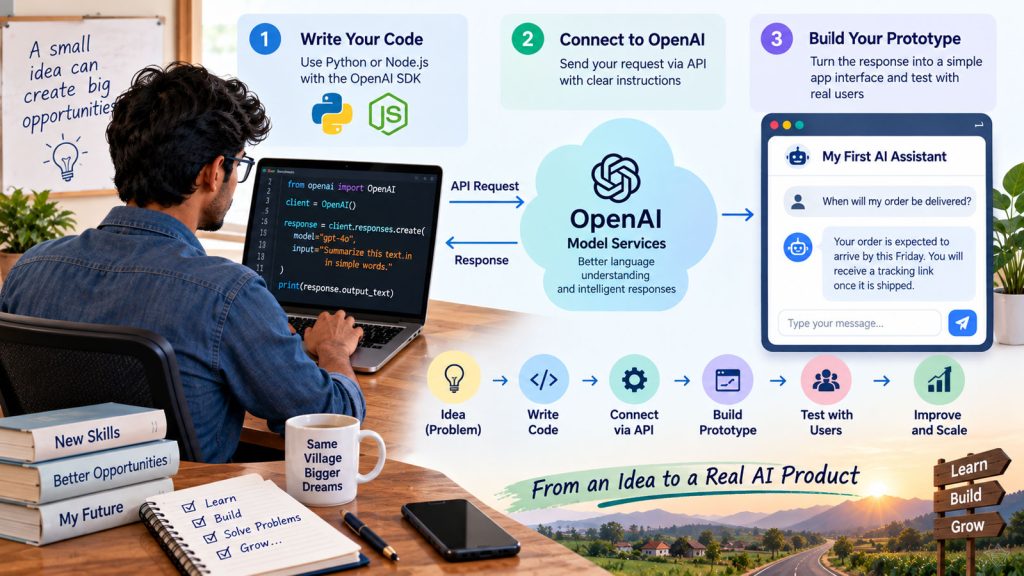
Step 1: Setting Up Your Development Environment
Consistency is vital when starting a business. Your development environment should be lightweight and focused on rapid iteration.
Configuring Your API Key
The first step is securing your credentials. Treat your API key as a sensitive asset from day one. Environment variables are your best friend here; avoid hardcoding keys directly into your application scripts. Use a .env file to manage your secrets locally, ensuring that your git history remains clean and secure.
Installing Dependencies
Most modern AI-powered businesses are built on Python or Node.js. The official OpenAI libraries simplify the communication process significantly. By installing the latest SDK, you gain immediate access to structured error handling and streamlined helper functions that save hours of manual boilerplate work.
Step 2: Crafting Your First API Request
Once your environment is ready, your goal is to generate a meaningful output with minimal complexity. Start with a simple chat completion call. This is the “Hello World” of AI product development.
Defining Your System Prompt
The system prompt is the brain of your application. In a business context, this is where you define the persona, constraints, and objective of your AI tool. Treat this document as part of your source code—version control it, test it, and refine it based on the results you observe.
Handling Responses
Your product’s user experience depends on how you handle the data returned by the model. Do not simply pass through raw text. Implement a parsing layer that converts the AI’s output into a usable format for your application, whether that is JSON, a formatted string, or a structured data object
Credit: https://www.youtube.com/@BigStupidTech
Step 3: From Prototype to Testable Workflow
A prototype is only useful if it allows you to gather feedback. Avoid the temptation to over-engineer the backend at this stage.
Building a Simple Frontend
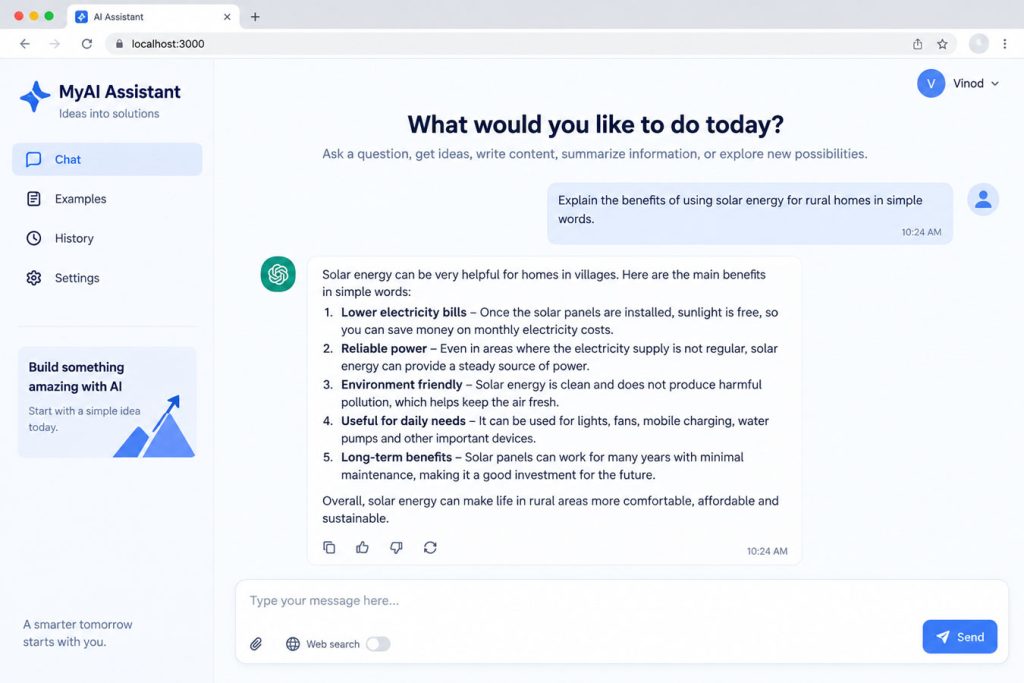
Whether you choose a command-line interface, a simple Streamlit dashboard, or a React frontend, keep the focus on the interaction between the user and the AI. If the core feature works in a crude UI, you have successfully validated the utility of your AI logic.
Iterative Testing
Use your early prototype to build a small evaluation dataset. Track the inputs you provide and the outputs you receive. By keeping a log of these interactions, you begin to build the necessary data for fine-tuning or prompt engineering as your business matures. This process transforms “coding” into “building a product.”
Strategic Considerations for the Technical Founder
As you build, remember that the technology is only a vehicle for your business model. The most successful developers in the current landscape are those who balance technical rigor with an obsessive focus on solving a specific problem for their target audience.
Scalability and Cost Management
While prototyping, keep an eye on your token usage. Implement logging and monitoring tools to understand which features drive costs. This visibility is essential when you transition from a “developer” to a “founder,” as it allows you to calculate unit economics effectively.
Maintaining Security and Governance
Even in the prototype phase, security should be baked into your design. Ensure that user data is handled according to best practices and that you are aware of the data privacy implications of the tools you use. Building with a security-first mindset early on will prevent significant compliance headaches as you scale.
Conclusion: Starting Your Journey
Building your first AI product using the OpenAI Developer Quickstart is about establishing a momentum. By focusing on the fundamentals—secure integration, clear system prompting, and iterative testing—you set a trajectory that prioritizes shipping value over infinite technical perfection.
The path from developer to founder is paved with small, testable milestones. Start with one feature, gather feedback from your initial user base, and use those insights to inform your next development sprint. Your ability to translate code into a solution that others are willing to use is your most valuable asset in this new ecosystem.
