
Published:
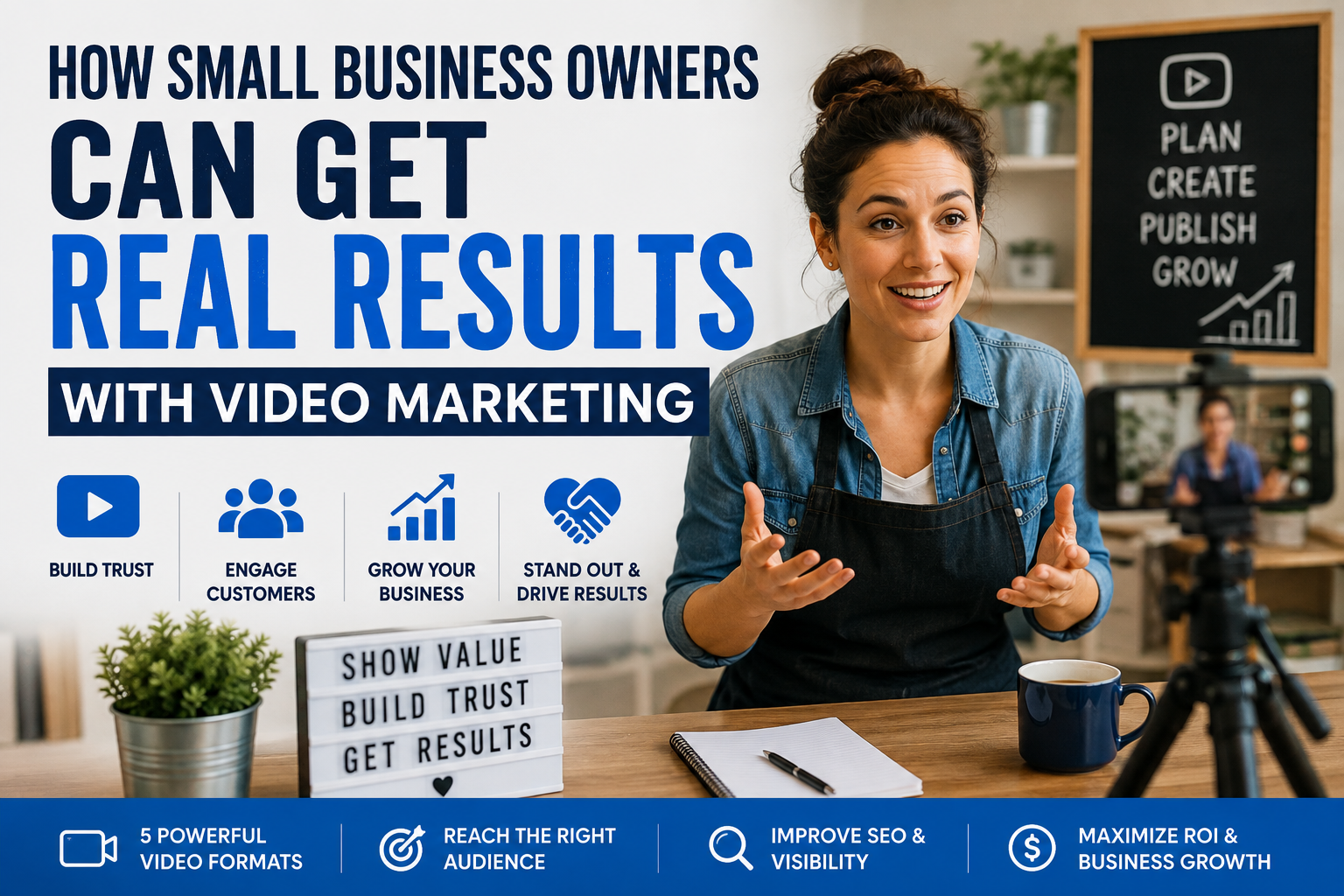
June 07, 2026How Small Business Owners Can Get Real Results with Video Marketing
For local and online small business owners trying to stand out, the hardest part of marketing is earning attention without draining time and cash. A solid digital marketing strategy can still fall flat when messages feel generic and customers scroll past. Video brings clear video marketing benefits that help spark customer engagement, strengthen brand awareness, and build trust faster than text alone. With the right focus, video can support real business growth.
What Video Marketing Really Means
At its core, video marketing is using video as part of your marketing plan to show value fast and clearly. A strong video marketing strategy turns what you do into something people can see, hear, and trust in seconds.
This matters because attention is expensive, and video can make each marketing dollar work harder. When you show benefits, proof, and personality upfront, more people take the next step, which can lift conversion rates and protect your edge in a crowded space. Many teams even report video marketing ROI as a practical win, not a nice-to-have. Combining that with a strong SEO and SEM strategy ensures your videos reach the right audience at the right time.
Build the Business Skills Behind Smarter Marketing Decisions
Once you understand what video marketing can do, the next step is building the decision-making skills to use it with purpose. Going back to school for a business degree can sharpen the marketing judgment behind every campaign, clarifying goals, choosing the right metrics, and making more confident calls as you grow. By earning a degree focused on marketing, you can learn skills that can help your business thrive, from positioning to planning and execution. Online degree programs also make it easier to keep your business running while you’re in class, so you’re not forced to choose between learning and leading; if you want to explore that path, you can click over here. With stronger fundamentals in place, it gets much easier to choose video formats that fit your goals and your audience.
Pick 5 Video Formats That Match Your Goals and Audience
When your business goals are clear, choosing the right video gets simpler, and results come faster. Use the same management mindset you use elsewhere: pick a goal, define a metric, then choose the format that best serves the customer.
- Use live videos to build trust fast: Schedule a weekly 10–15 minute live session that answers the top 3 questions you hear in sales calls. Promote it 48 hours ahead, collect questions in advance, and end with one specific call to action like “book a consult” or “see today’s bundle.” Live works because it’s real-time proof of expertise, and you can repurpose clips into short posts afterward.
- Create a one-problem explainer video for each buyer segment: Start with target audience segmentation, new prospects, comparison shoppers, and existing customers need different explanations. Write one 60–90 second explainer per segment: the problem, your simple process, and the next step. Post the “new-to-you” explainer on your homepage or service page since websites with videos can be 53% more likely to appear on Google’s first page, then use the segment-specific versions in email follow-ups.
- Film demo videos that remove purchase friction: A demo isn’t a full tutorial, it’s the fastest path to “I get it.” Record 2–3 minutes showing one outcome (before/after, setup-to-result, or “what you get in the box”), then add time-stamped chapters in the description. For platform-specific video strategies, go vertical and tight for short-form social, and use longer demos on your website or video platform where people are actively comparing options.
- Capture customer testimonials with a repeatable script: Ask for a 20-minute call and guide customers with three prompts: “What was happening before?”, “Why did you choose us?”, “What changed after?” Get permission to use their name, business, and results, then edit into three cuts: a 15-second highlight, a 45-second story, and a 2-minute detailed version. Match each cut to the audience stage, short for awareness, long for decision-makers.
- Turn your content into a simple platform-specific publishing plan: Pick one “home base” for your longer videos, then adapt each into two short clips and one post with a quote or key takeaway. Track one metric per goal, leads for demos, watch time for explainers, replies for testimonials, because social engagement is becoming a top video success metric for many marketers. This keeps your efforts measurable, budget-aware, and easy to improve month over month.
Video Marketing FAQs for Small Business Owners
Q: What’s a realistic video marketing budget to start with?
A: Start small and tie spending to one measurable goal, like leads or bookings. Many owners begin with a phone, a simple mic, and a monthly editing tool, then upgrade only after results show up. Set aside a test budget for 30 days and review cost per lead or sale.
Q: How do I choose video production tools without overbuying?
A: Pick tools that remove your biggest bottleneck: audio quality, lighting, or editing speed. A smartphone plus a lav mic and a basic tripod is enough for clear demos and testimonials. If editing slows you down, choose one template-based editor and stick with it.
Q: Which video publishing platform should I use first?
A: Use one primary platform where your buyers already search, then repurpose elsewhere. For many businesses, YouTube works well because YouTube is now considered the most effective form of B2B content marketing.
Q: How do I handle SEO video optimization if I’m not “technical”?
A: Focus on basics: a keyword-rich title, a clear first two lines in the description, and consistent tags. Add captions and name your file descriptively before upload. Put one call to action in the description so viewers know the next step.
Q: What video analytics should I track to know it’s working?
A: Track one core metric per campaign: watch time for awareness, clicks for consideration, and leads or sales for conversion. Keep an eye on retention and drop-off points to improve your opening and pacing. If you need a length target, 73% of marketers believe videos should be between 30 seconds and two minutes long.
Turn One Weekly Video Into Consistent Small Business Growth
It’s easy to overthink video, budgets, tools, SEO, and analytics can make publishing feel like one more job. The way through is a simple mindset: consistent video marketing integration tied to clear business promotion strategies and a few steady marketing strategy tips, not perfection. Done well, that rhythm strengthens audience engagement and makes your video content impact visible in leads, trust, and repeat sales. Consistency beats complexity in video marketing. Pick one topic your customers ask about and record a short, helpful video this week, then publish and review the basic metrics. That small habit compounds into resilience and long-term small business growth.
